Cloud types / Nimbostratus
Nimbostratus · Ns
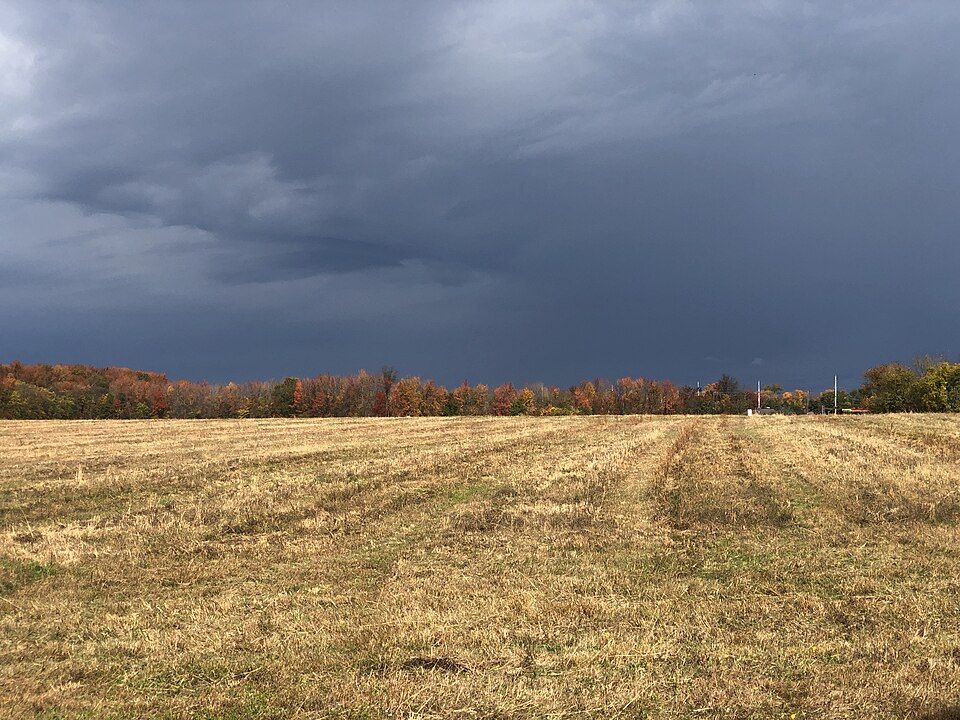
| Cloud level | Mid |
| Altitude | Base often below 3 km |
Nimbostratus is a dark, extensive, and deep layer cloud that completely obscures the sun and moon across the sky. Characterized by its diffuse, wet, and featureless appearance, it possesses immense vertical depth that frequently extends through multiple atmospheric levels. As the quintessential bad-weather cloud, it commands meteorological attention because it is the sole cloud genus responsible for steady, continuous precipitation over widespread geographical regions.
How it forms
Nimbostratus develops through widespread, sustained upward motion of deep, humid air masses, commonly along active warm fronts or within occluded low-pressure depressions. As altostratus thickens and its base steadily descends, continuous condensation creates a profound, multi-kilometer cloud layer combining water droplets, supercooled drops, and snow crystals.
Identification keys
- Uniform, dark gray cloud layer with a diffuse, rainy appearance
- Sun and moon are completely obscured throughout its extent
- Base is thick, dark, and often below 3 km altitude
- Ragged low shreds of cloud (pannus) frequently drift underneath
- Accompanied by steady, continuous rain or falling snow
Typical weather
Nimbostratus produces steady continuous precipitation in the form of rain or snow that persists for hours over vast regions. It brings low visibility, high humidity, and overcast skies, without the violent wind gusts, thunder, or hail typical of cumulonimbus.
Often confused with
Photography tip
Use manual exposure compensation to prevent the camera meter from overbrightening the dark, wet gray tones of the rainy sky.
Questions about this cloud
Can nimbostratus produce thunder and lightning?
No, nimbostratus never produces thunder or lightning. Only cumulonimbus clouds generate thunderstorms and hail.
How can I tell if rain is falling from nimbostratus or cumulonimbus?
Rain from nimbostratus is steady, widespread, and continuous over hours. In contrast, precipitation from cumulonimbus occurs as sudden, heavy showers often accompanied by wind shifts, lightning, or hail.
Got a photo like this? Run it through the identifier: